Ten Days to Tear It Down
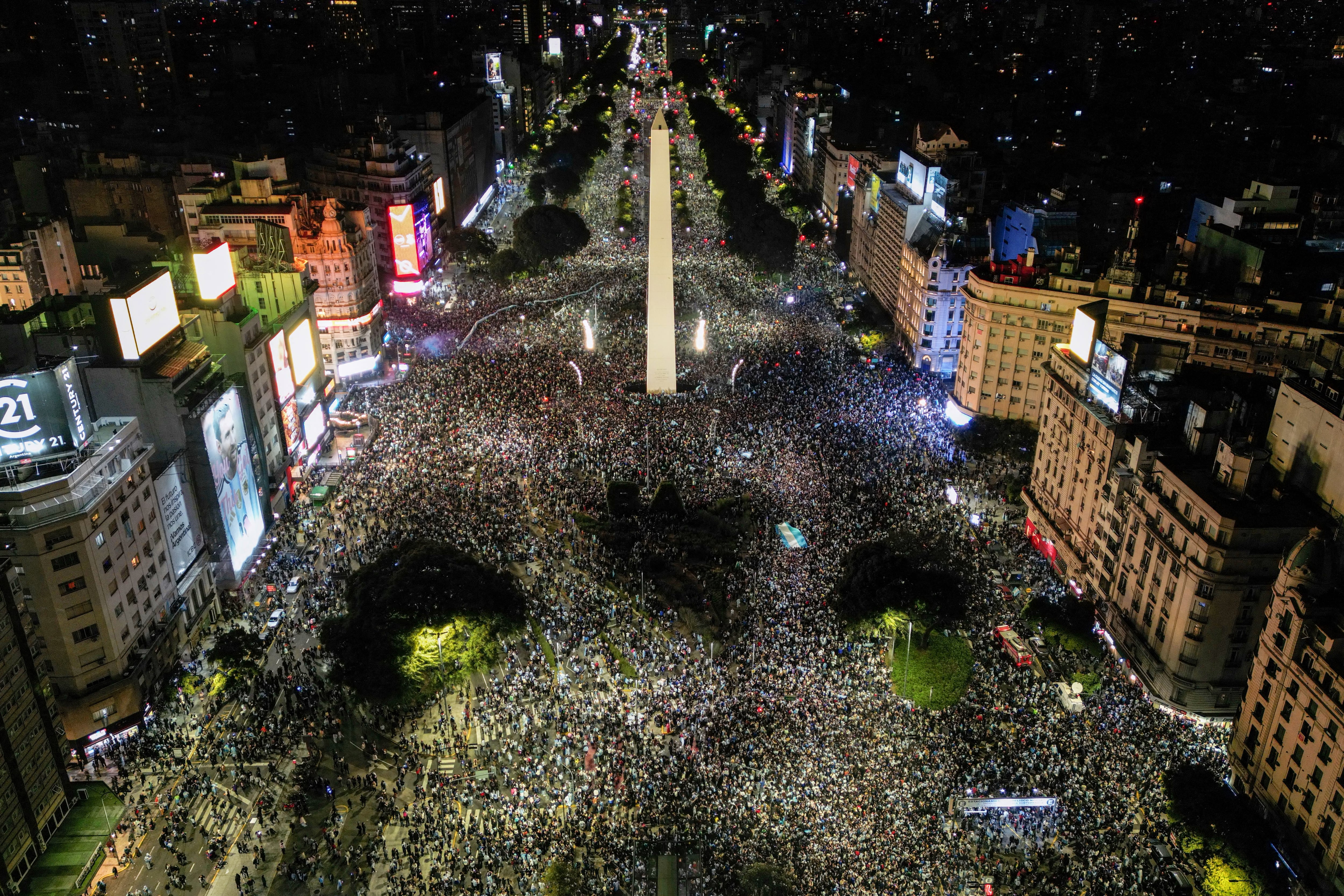
In 1939 the city gave itself ten days to demolish the Obelisco — the monument its own mayor called "the soul of Buenos Aires" and everyone else called worse. This year it turned 90, opened to the public for the first time ever, and held the whole country's heart twice in one week.
The Obelisco went up in 31 days in 1936, on the spot where the colonial-era Church of San Nicolás de Bari had stood since the 1700s — the same church where Argentina's flag was first raised over Buenos Aires, in 1812, and which said its final mass in 1931 before city litigation cleared the block for the centenary monument. One of the 157 workers who built it, an Italian named José Cosentino, died in the excavation. At the inauguration that May, the city's intendant, de Vedia y Mitre, called the finished obelisk "la materialización del alma de Buenos Aires" — the soul of the city, made concrete. Porteños had other names for it: adefesio, bodrio. Monstrosity. Garbage.
Three years later they nearly got their way. In 1938 stone panels started falling off the shaft — subway construction shaking the foundations, most likely — and in June 1939 the city council voted to tear it down, giving itself ten days to do it. What actually saved the Obelisco wasn't a change of heart. Mayor Arturo Goyeneche vetoed the demolition on a technicality: the city didn't have jurisdiction, he argued, over a monument that belonged to the nation. The national government paid to reface it. Nobody had to admit they liked it.
This May, ninety years after that inauguration, Buenos Aires threw the Obelisco an actual street party — Corrientes closed off for the night, decade-by-decade installations running from the 1930s to now — and opened a public mirador inside it for the first time in its history: a glass elevator up the shaft the council once scheduled for demolition. Two months later, on July 15, the same base was packed with fans watching Argentina beat England to reach the World Cup final. Four days after that it was packed again for the final itself — Spain 1, Argentina 0 after extra time, Ferran Torres' winner, Messi in tears collecting a runner-up medal in what was probably his last World Cup. Same square, both nights.
The elevator up, per Infobae, holds four people at a time. Twenty minutes, and you're back down.