Lola Mora's Last Address
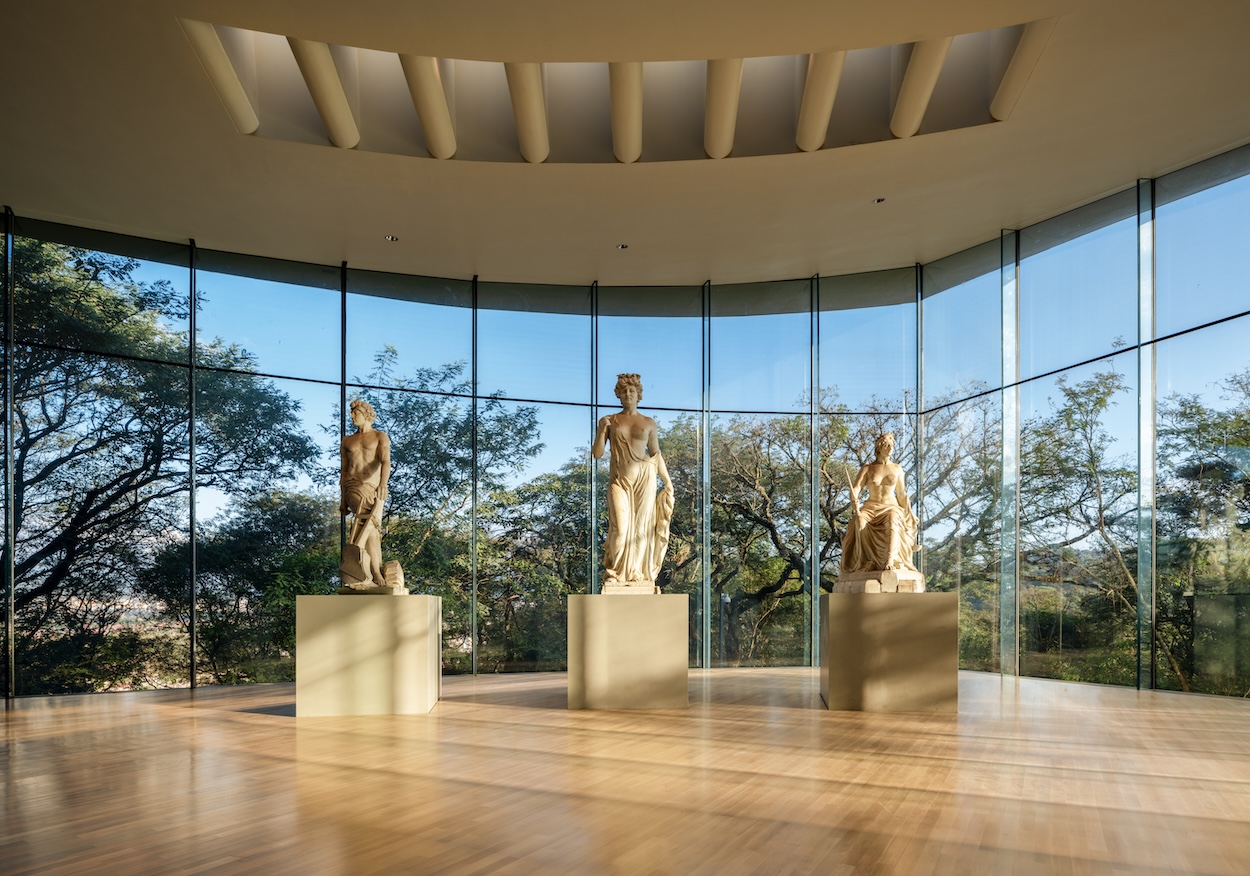
Argentina's Congress found her sculptures too indecent to keep. A century later they got a museum — the last building by an architect who also had to leave the country to get famous.
In 1906, two sculptural groups by Lola Mora went up on the front staircase of Argentina's new Congress building: nude allegorical figures for Liberty and Commerce, Work, Peace and Justice. She'd already been pushed out of Plaza de Mayo once — her original commission, the Nereids Fountain, got quietly relocated to the Costanera after the city decided naked nymphs were too much for the capital's main square, and Mora scandalized passersby just by wearing trousers to sculpt in public.
The Congress figures lasted fifteen years. In 1913, with a corruption scandal already swirling around the building's own cost overruns, a radical deputy stood up and called Mora's sculptures "monstrosities that insult the memory of those they claim to honor." By 1921 they were off the staircase for good, crated north to Jujuy, and scattered piece by piece across provincial gardens for the next hundred years. Mora died in 1936, broke and mostly forgotten — despite a gold medal at the 1900 Paris Exposition, the kind of recognition Buenos Aires never quite matched at home.
This month, per The Art Newspaper, all six pieces stood in the same room for the first time since 1921 — not in Buenos Aires, but inside a new museum built for them in Jujuy. The building is the last work of César Pelli, finished seven years after his death: an Argentine architect who, like Mora, had to leave the country to become genuinely famous, and who spent his career building skyscrapers on other continents before ending it on a circular, chisel-shaped museum in the province that kept his countrywoman's exiled sculptures safe when the capital didn't want them.
"Lola created, fought and challenged the conventions of a society that often failed to recognise her talent," says the center's director, Victoria Martínez Fascio.