Bones on the Outside
For Halloween: the 1938 evening dress Schiaparelli and Dalí made with its skeleton on the outside. The V&A show it's in is sold out, with two weeks left.
Forget the costume shop. The best skeleton anyone ever wore is an evening dress from 1938. Elsa Schiaparelli made it with Salvador Dalí for her Circus collection that February: a slim black silk crêpe gown with ribs, a spine and leg bones raised on it in trapunto, cotton wadding stitched between the layers so the bones stand up off the body. The V&A calls theirs "the only known original of the Skeleton dress". It's in Schiaparelli: Fashion Becomes Art, the first UK show on her, which closes November 15 and is sold out.
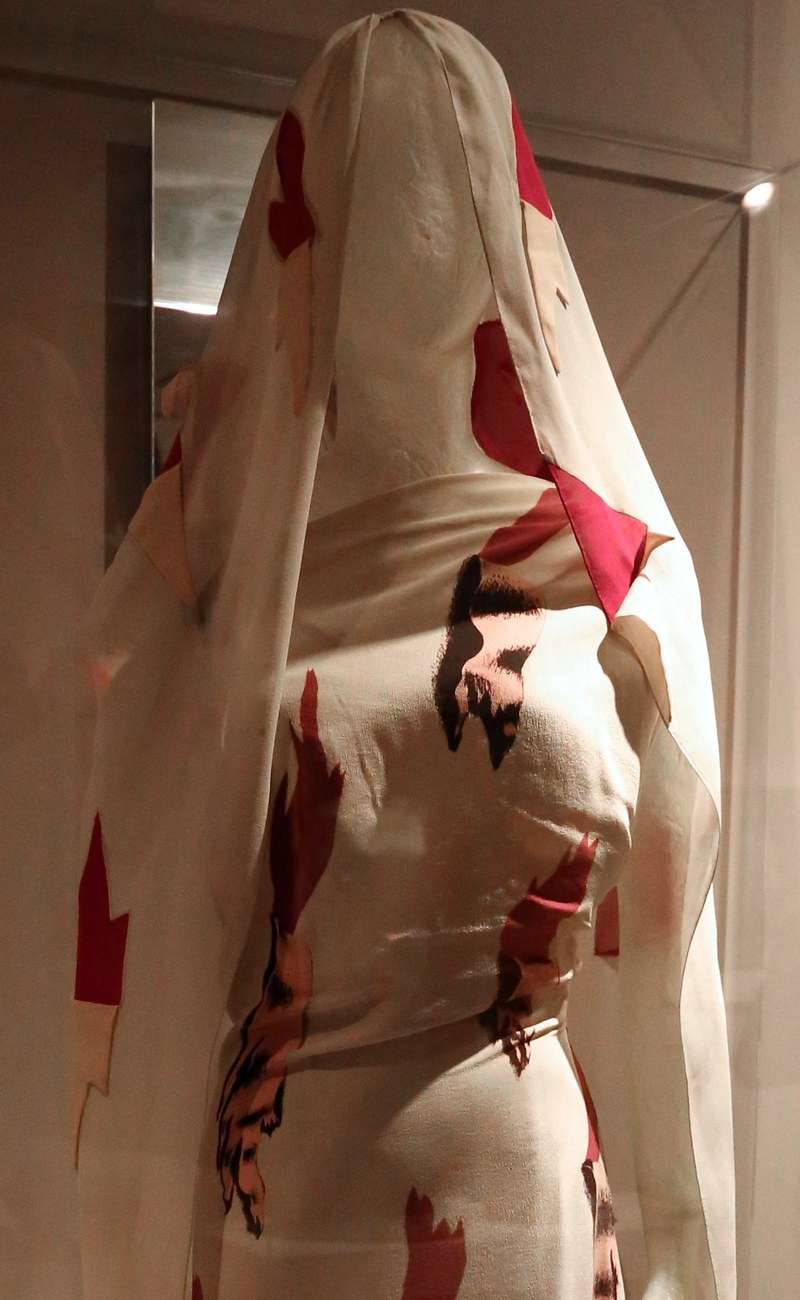
Same collection, same collaborator: the Tears dress, a pale blue gown printed with Dalí's fake rips, meant to look like torn animal flesh, worn with a veil where the tears are actually cut out.
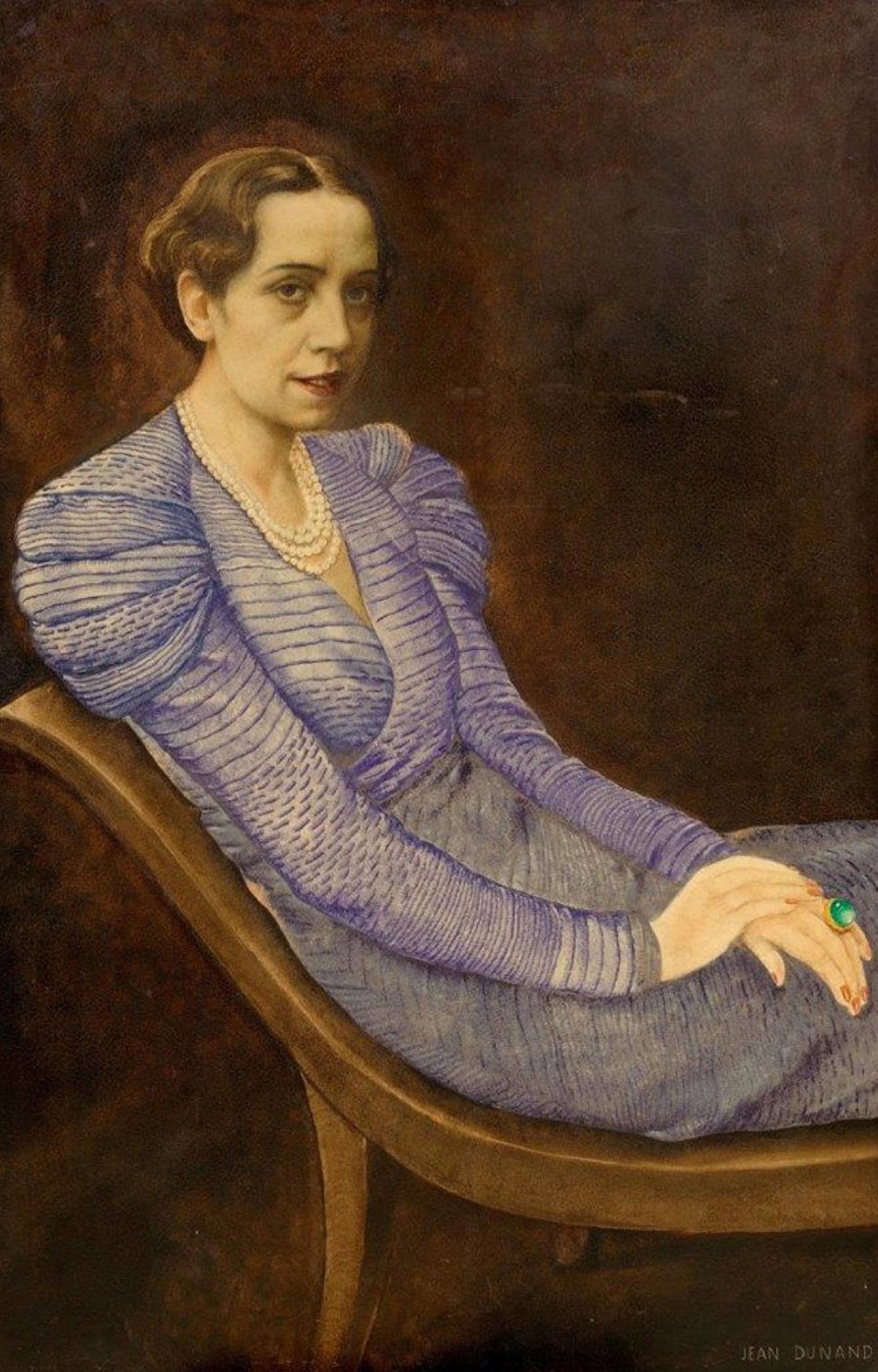
In the 1930s she was winning. In 1934 Time put Chanel in the second division of fashion and wrote: "Madder and more original than most of her contemporaries, Mme Schiaparelli is the one to whom the word 'genius' is applied most often." The same piece said every little dress factory in Manhattan had copied her, and "millions of shop girls who had never heard of Schiaparelli were proudly wearing her models" (Wikipedia). Chanel had the bigger fortune, about $15 million by Time's count, and a line for her rival: "that Italian artist who makes clothes." Top: Schiaparelli in 1933, painted by Jean Dunand, wearing her own model No. 102.
Then the war. She sat most of it out in New York, came back to a Paris that had moved on to Dior's New Look, stopped making couture in 1951, and in December 1954 closed the house, heavily in debt. The same year, Chanel came back to the business. Schiaparelli published a memoir called Shocking Life, retired between Paris and Tunisia, and died in 1973. She's buried in Frucourt, a village in the Somme. Her name hung on through a perfume licensing company until Diego Della Valle bought it in 2007 and turned it back into a couture house; Daniel Roseberry has run it since 2019.

Chanel meant it as an insult. The V&A used it as the title.