Beware of Imitation Chairs
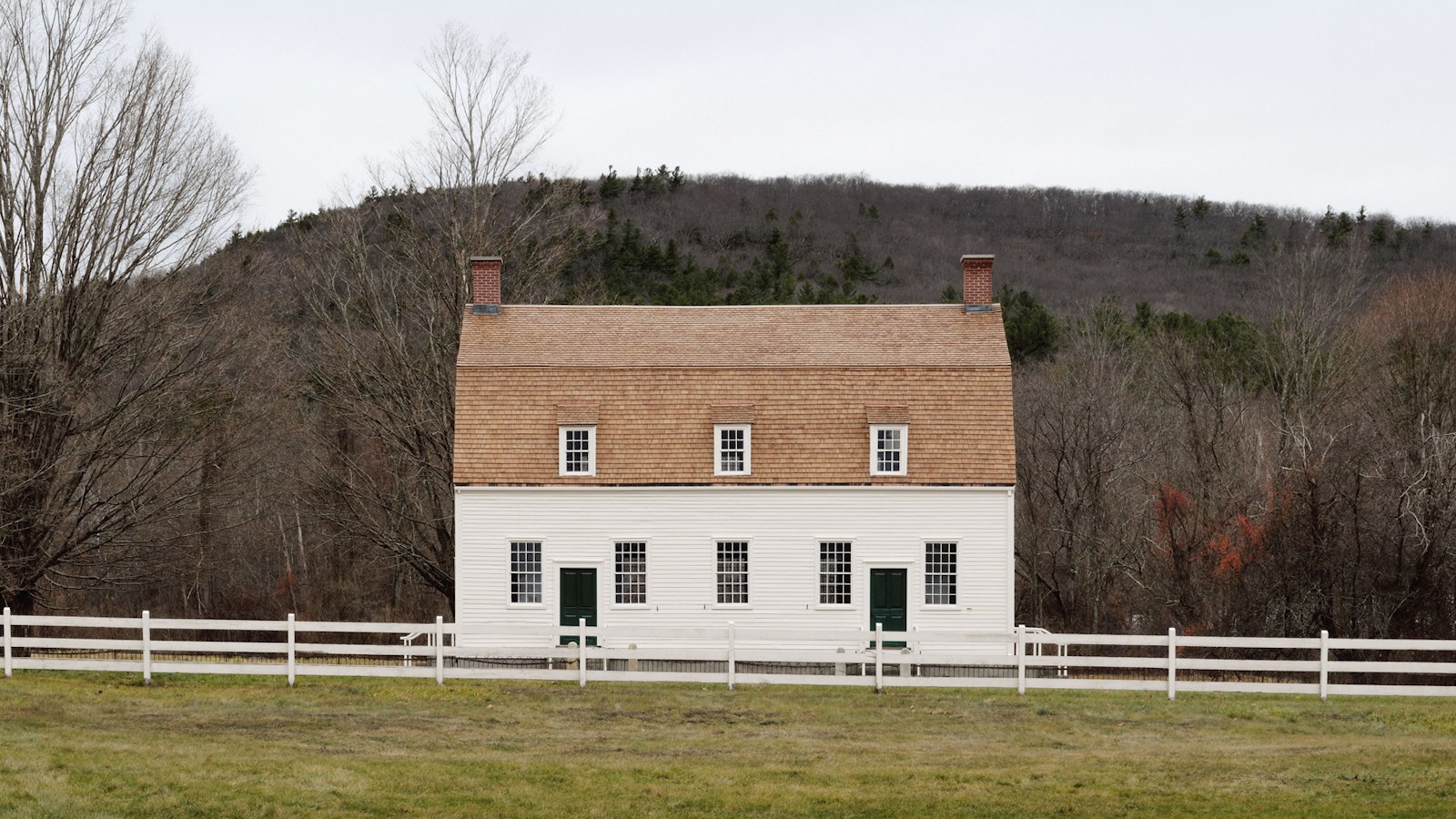
In 1874 the Shakers were already warning customers about fake Shaker chairs. Today "Shaker" is most of America's kitchen cabinets, and there are three Shakers left.
"Beware of imitation chairs which are sold for our make, and which are called Shakers' chairs." That's the Shakers themselves, in the chair catalogue Brother Robert Wagan printed at Mount Lebanon, New York, in 1874, the first illustrated one they ever bound. A year later every genuine chair left the factory with a gold decal on it, and the catalogue added that "none others are of our make notwithstanding any claims to the contrary." At least three upstate New York factories were turning out chairs called "Shaker" by then, per the Shaker Museum's own history of the fight.
Worth remembering who was complaining. The United Society of Believers in Christ's Second Appearing: celibate, communal, pacifist, men and women on equal footing, founded by a Manchester textile worker named Ann Lee who crossed to America in 1774. Their rulebook, the Millennial Laws, banned "beadings, mouldings and cornices which are merely for fancy." The chair is plain because ornament was a small sin, not because anybody was going for a look.
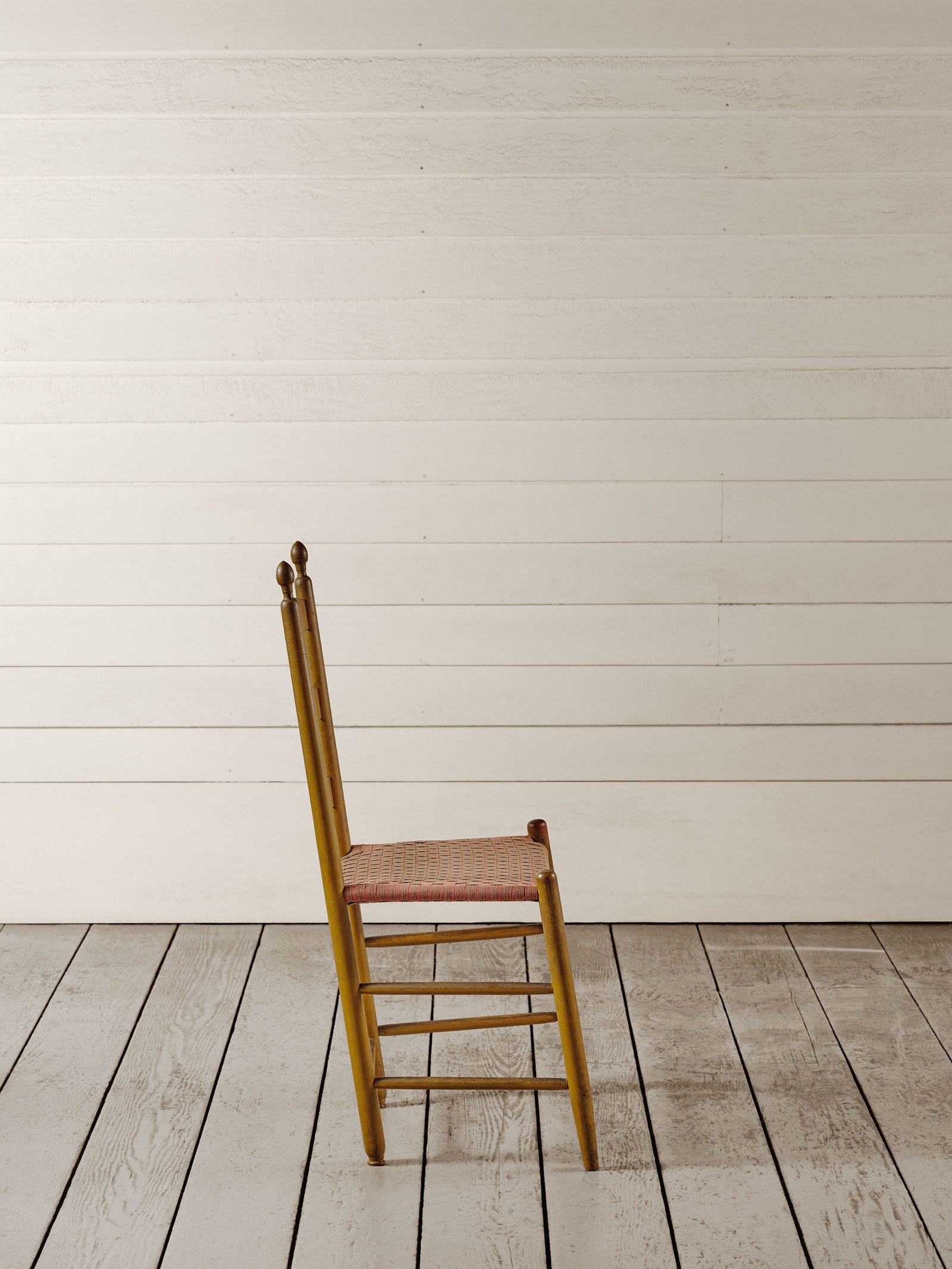
But the business was completely real. By 1872 Wagan's South Family was building a steam-powered chair factory, and an elder watching him work wrote down the line the museum now uses as a headline: "Anything will sell that is carried into the market." He was right, and so were the warnings. The imitators never stopped. They just won.
"Shaker" today is a cabinet door. Recessed flat panel, square frame, zero moulding: 61 percent of renovating homeowners picked it in Houzz's 2025 kitchen study, more than every other style combined. In 1990 Oprah paid a record $220,000 for a red-painted Shaker work counter. Somewhere between those two numbers, the name stopped belonging to anyone.
On Friday the Milwaukee Art Museum opens The Shakers: A World in the Making, the Vitra Design Museum's touring show, staged by Formafantasma: about 90 historic pieces next to new commissions. There's a sewing desk with drawers on both sides so two Sisters could work at it at once, and an adult-size cradle, for rocking the old and the dying. "Labor is a form of worship," the curator, Shoshana Resnikoff, told Newcity. Nobody's knocked off the cradle yet.
At their peak there were around 6,000 Shakers across twenty-two villages. Today there are three, at Sabbathday Lake, Maine: Brother Arnold Hadd, Sister June Carpenter, and Sister April Baxter, who moved in last year. They still grow herbs, pack them in tins and sell them. Genuine, no decal required.