What Does It Mean Anymore?
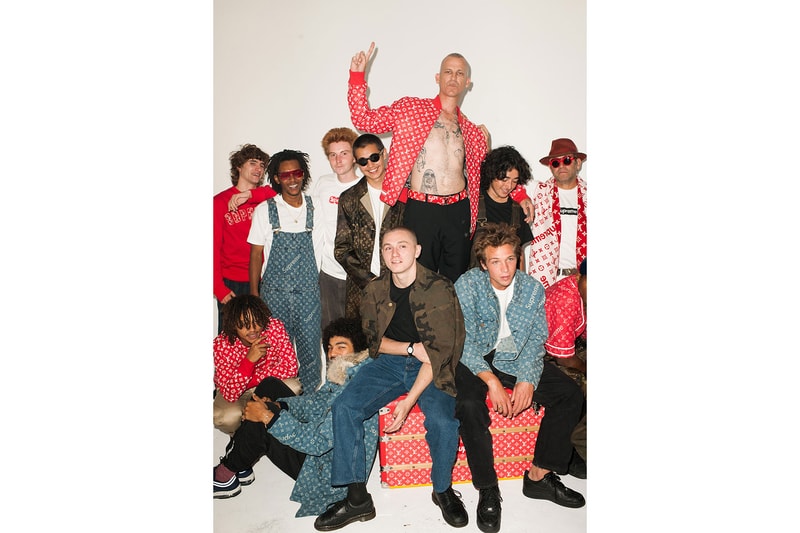
In 2000, Louis Vuitton told Supreme to burn the skate decks wearing its monogram. Seventeen years later Vuitton put Supreme's own box logo on its trunks — and streetwear's new 20-year oral history can't stop circling back to it.
In 2000, Supreme printed Louis Vuitton's monogram across a run of skateboard decks — no license, no phone call, just a five-year-old skate shop on Lafayette Street wallpapering its own box logo over somebody else's luxury pattern. LVMH's lawyers found the boards within two weeks. The cease-and-desist reportedly told Supreme to destroy what was left rather than let them keep circulating.
Seventeen years later, Louis Vuitton did the opposite on purpose. Kim Jones — the house's menswear designer, a few years out from running Dior — put Supreme's box logo on official Vuitton monogram print, sent it down a Paris runway in January 2017, and released it that June through pop-ups in nine cities: New York, London, Tokyo, Seoul, Beijing. Terry Richardson shot the lookbook. A red monogram trunk shipped with a matching, fully licensed skateboard folded inside — cosigned, this time. A deck from the original, once-contraband 2000 run has since resold on eBay for $10,000.
Highsnobiety just published a 20-years-later oral history of streetwear's run from Lafayette Street to Paris runways, titled, a little too on the nose, Everything Is Streetwear. The Vuitton deal is the story everyone in it keeps circling back to. Cav Empt's Toby Feltwell, who was there for both ends of it: "If that's now Vuitton, what does it mean anymore? When you go from a self-made bunch of friends doing what they think is cool with no real external support to having something officially sanctioned by the most dusty, venerable part of the luxury world, it's drawing a curtain over something."

Nobody's burning anything now. Tyler Watamanuk's new book on the whole streetwear arc spends four decades getting to this exact deal before it ever reaches the runway show — Lafayette Street to Vuitton pop-ups in nine cities, autographed, resold, retrospected. Feltwell isn't wrong that it's the end of something. He's just not the one who has to say what comes next.